Mariana (Commelina erecta): from graphite to watercolor, a study in progress

Updated: Mar 30
Mariana (Commelina erecta), with its intense blue and delicate sheen, continues to reveal itself in layers throughout my process of observation and painting. After the encounter in the field and the initial record in the Caatinga Field Journal, I began last week a two-stage study: first a graphite drawing, followed by the first watercolor interpretation.
The study began in graphite as a way to better understand the flower’s structure, the arrangement of its petals, the delicacy of its stamens, and the relationship between transparency and form. This stage was essential for slowing down the gaze and building intimacy with the species.

Next, I transferred the drawing onto watercolor paper using a light pad, preserving the delicacy of the line and ensuring fidelity to the observed structure. After the transfer, I used a kneaded eraser to gently lift the excess graphite and keep the paper clean, ready to receive the first layers of color.
In watercolor, I began by blocking in the main shapes and color masses, seeking to understand the behavior of the blue and its subtle variations. Gradually, I moved into the shadows, refinement of the contours, and the delicacy of the petals.
One of the aspects that most drew my attention in this flower was the soft sheen across the surface of the petals. To suggest this luminosity, I used the finest brush in the studio and applied tiny gouache dots, trying to represent the luminous texture that Mariana reveals when observed up close.

Although I have completed this first version of the study, I feel that the flower is still asking for another path. Some of the decisions made during the painting process awakened in me the curiosity to explore a new approach, especially in relation to the transparency of the blue and the way light passes through the petals.
For this reason, I will continue this investigation throughout the week, testing other technical choices and observing how small changes in the process can generate distinct visual results.
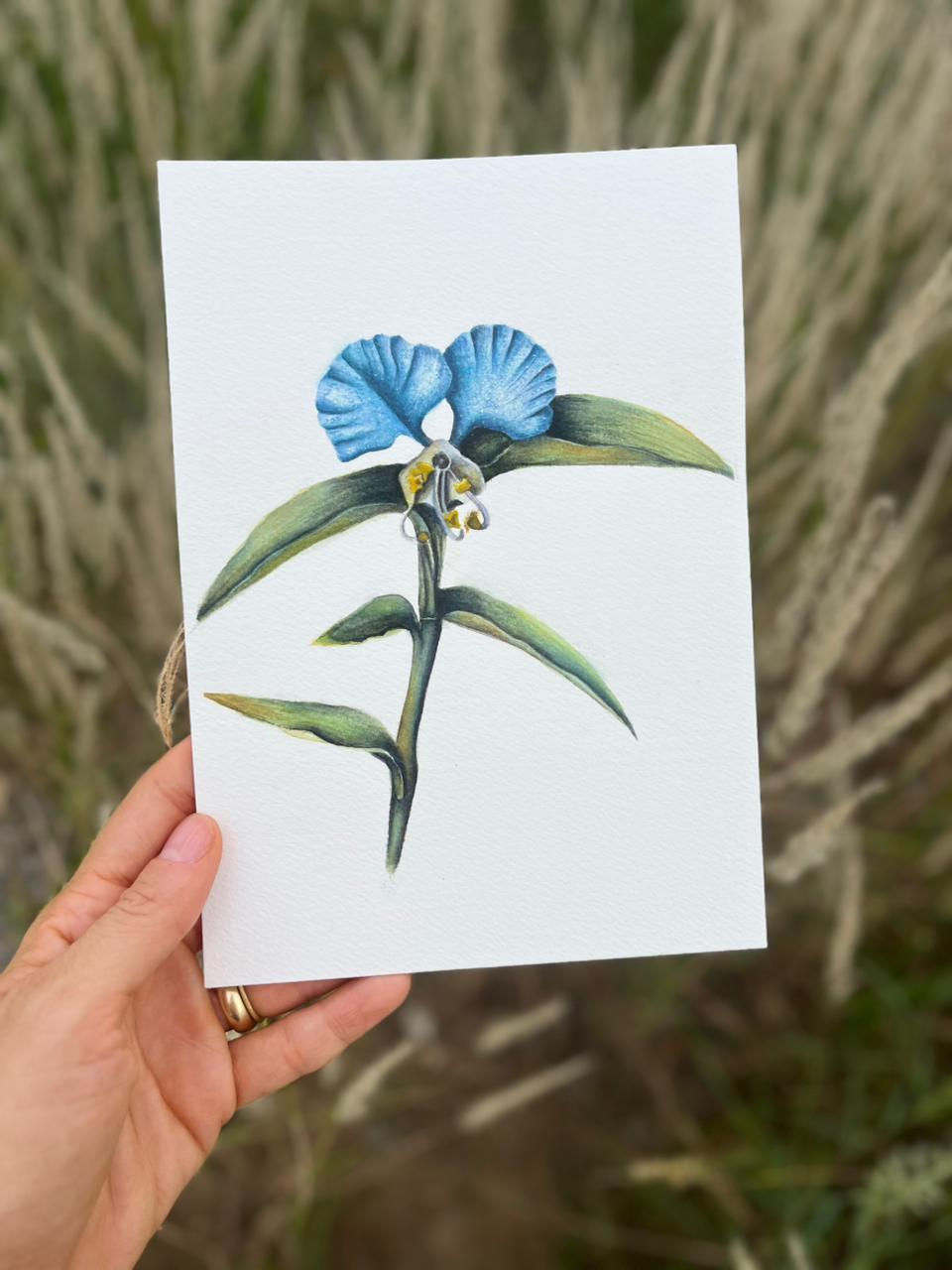
More than completing a painting, this study interests me as a field of experimentation, where the flower continues to teach new possibilities of seeing and translating.
Mariana, once again, confirms what I felt in our first encounter: it is a blue that asks for presence.

Comments