Mariana: Three Encounters, A Gaze That Matures in the Field

Some flowers arrive first through imagination.
My first encounter with Mariana happened while reading Flowers of the Caatinga (CASTRO; CAVALCANTE, 2010), when the species still lived only within the territory of research and imagination.
Even before seeing it in the field, I was already captivated by the delicacy of its petals and the singular beauty of its form. At that moment, it seemed like one of those rare flowers that might remain only in the realm of research, images, and the desire to one day find it.
But the field always surprises us.
The second encounter happened last month, during the rainy season. I was cycling and did not expect to find it. It was an unexpected and deeply enchanting meeting.
When I saw it alive for the first time, my gaze became completely held by the petals and the center of the flower. There was such delicacy in its floral structure that I simply could not stop contemplating it. The petals seemed to hold the entire poetic force of that encounter.
I also observed the leaves and took photographs, but I realize that, in that moment, the focus of my gaze remained almost entirely on the flower. The enchantment with the petals was so intense that they became the absolute center of observation.
This past weekend, already at the beginning of April, the third encounter happened. On Saturday, I cycled 46 km. On Sunday, another 20 km. And on both routes, I found Mariana once again.

This time, the contemplation was different. The delicacy of the petals was still present, but my gaze was naturally guided toward the leaves. The highlight of this reunion was there: the shape, the structure, the growth, the way they arranged themselves along the branch and occupied the surrounding space.
I believe this happened because I am currently painting the second watercolor version of this flower, and at this stage of the painting I am deeply immersed in the study of the leaves. Perhaps that is why the field directed my gaze with such precision.

On Saturday, I was able to sit near the plant, observe every detail of the leaves up close, photograph them, and notice the way they grew and presented themselves within that environment. It was a slower, more analytical observation and, at the same time, one profoundly connected to the watercolor process.
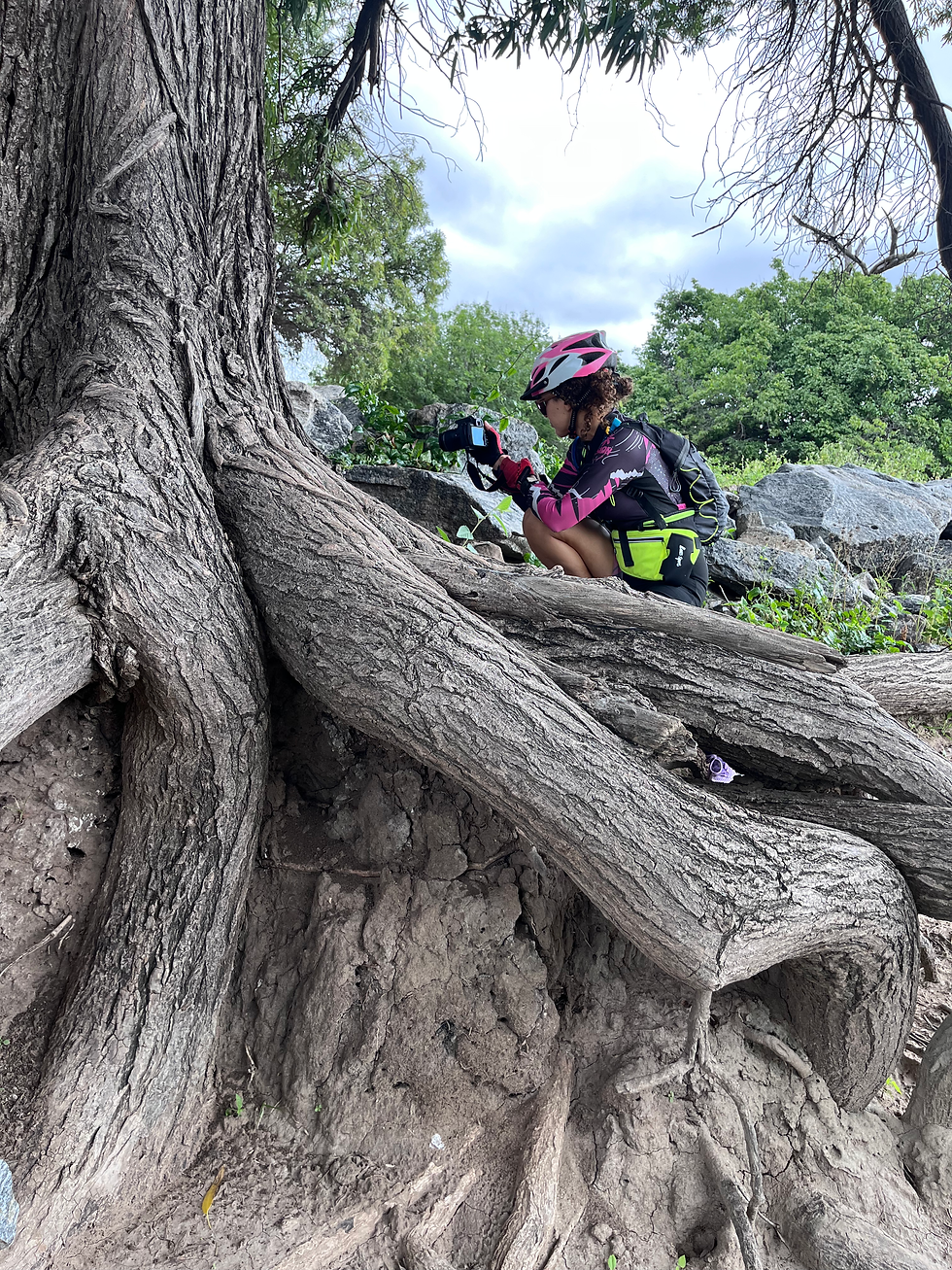
It is beautiful to realize how each encounter with the same species reveals a different layer. First, the flower arrived through research.Then, through the petals. Now, through the leaves and with that, the gaze itself also matures.
In the next post, I will share the second watercolor version of Mariana: a painting shaped by this April reunion and by a careful gaze toward the leaves.
References
CASTRO, Antonio Sérgio; CAVALCANTE, Arnóbio. Flores da caatinga. Campina Grande: Instituto Nacional do Semiárido, 2010, p.59 Disponível em: Flores da caatinga (PDF). Acesso em: jan. 2026.


Comments